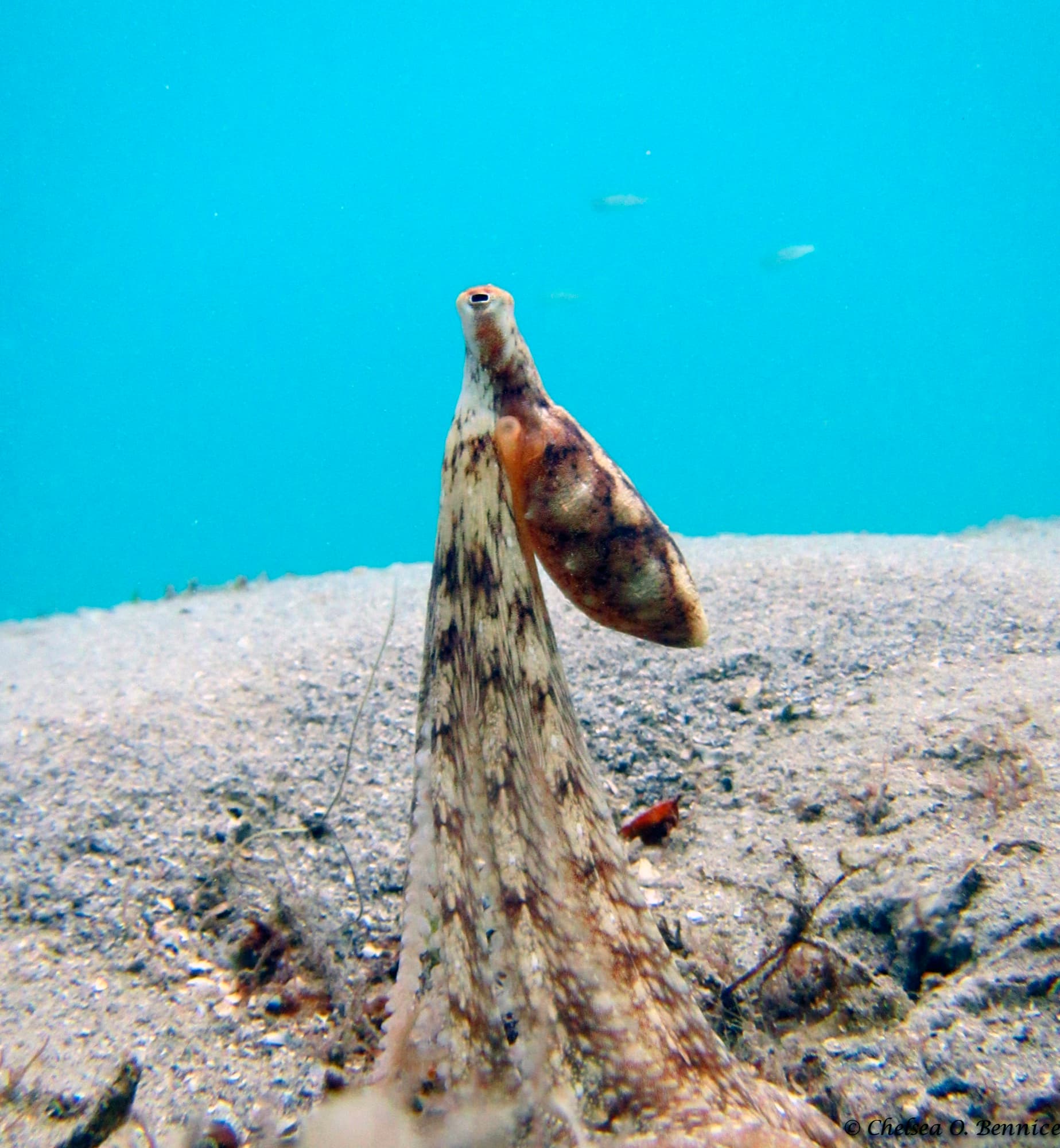
Photo: Chelsea Bennice
Atlantic Longarm Octopus
Macrotritopus defilippi
 OctoMatic
Utilizing AI species classification, citizen science, and community engagement to promote octopus biology and marine science.
Photo: Chelsea Bennice
Built as a field guide you can carry in your pocket.
01
Upload a photo and adjust the square crop so the model sees the octopus, not the surrounding habitat.
02
OctoMatic will identify the best matching species of your image, with location and life history context to ensure accurate identification.
03
Submit your image for research and review! Your contribution will be confirmed for accurate ID and be used to improve OctoMatic.
Currently, OctoMatic is limited to Florida and Caribbean species. Browse life-history traits, ranges, and look-alikes for each taxon in our guide.
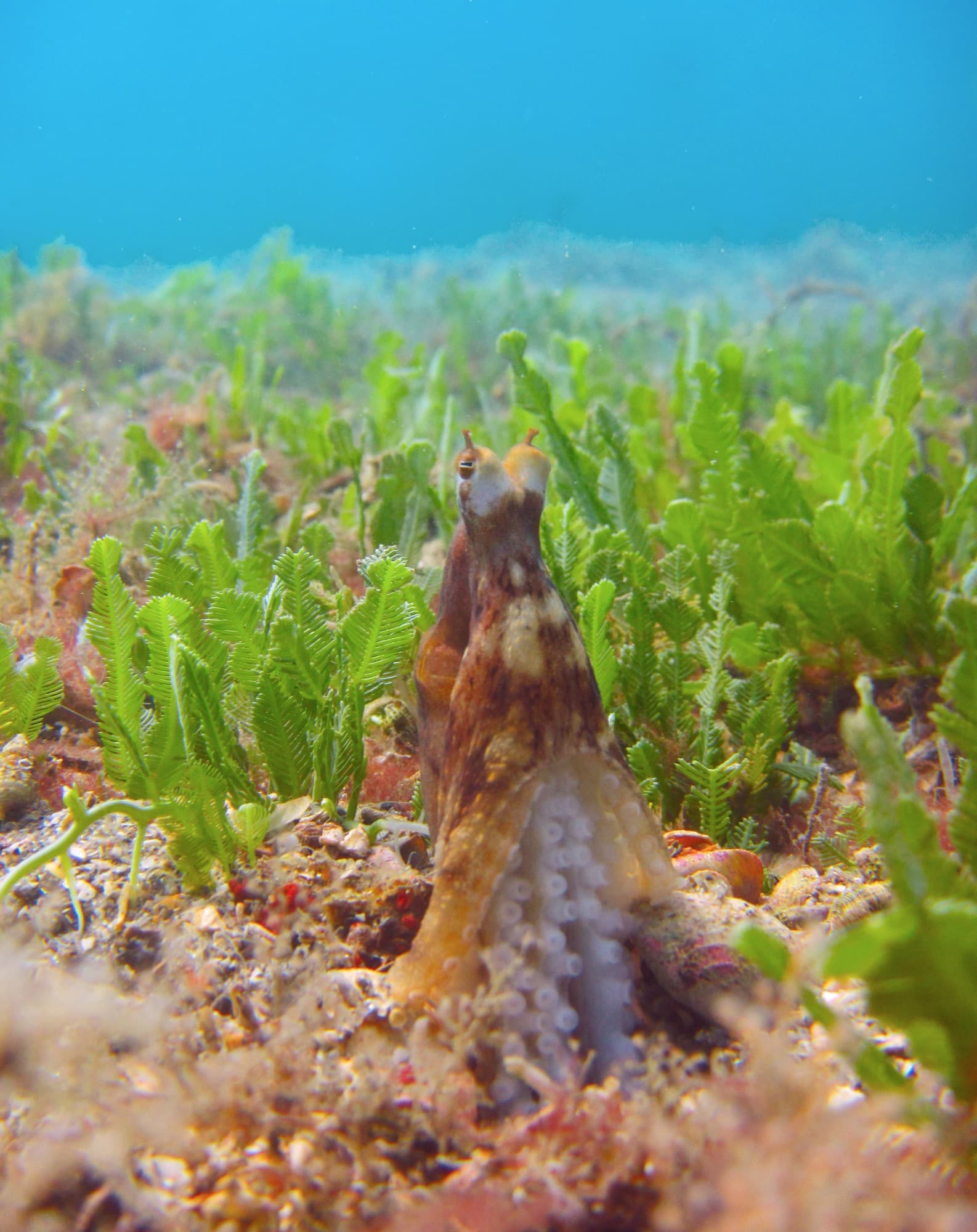
Photo: Chelsea Bennice
Macrotritopus sp.
The Atlantic longarm octopus (Macrotritopus defilippi) is slender-bodied, with long, tendril-like arms that extend three to eight times its mantle length, and is a primarily shallow water, sand-dwelling species notable for its ability to burrow in sand and imitate other animals shapes while swimming. The classification of the Macrotritopus is under debate. Traditionally, the species Macrotritopus defilippi covers the entire Atlantic distribution of longarm octopuses. However, recent work argues that M. defillippi is limited to the NE Atlantic and Mediterranean. Both Macrotritopus beatrixi and Macrotritopus scorpio are possible names for Florida longarm octopuses, but genetic analysis is required to confirm this. Due to this confusion, OctoMatic classifies this taxa to the genus only.
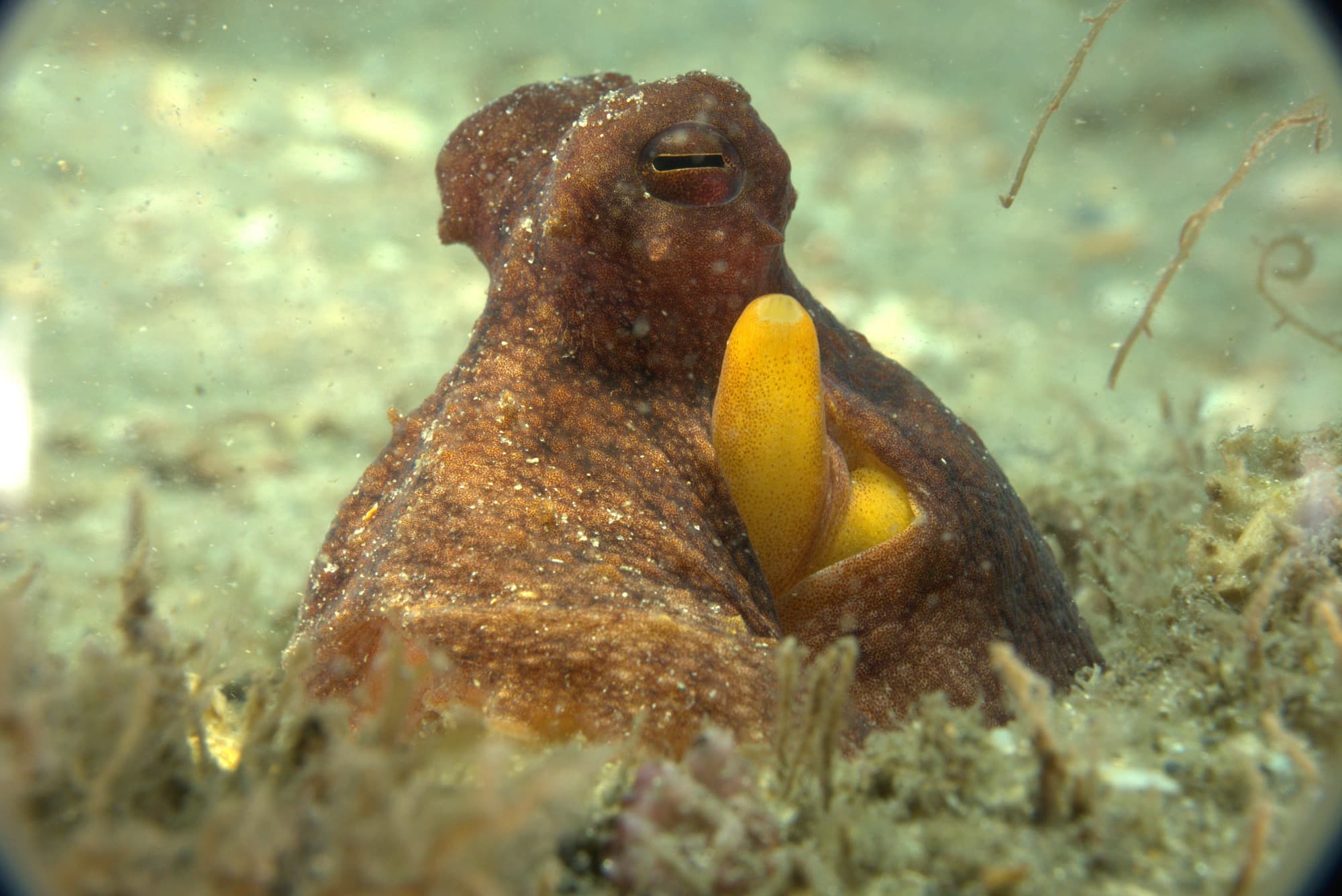
Photo: Chelsea Bennice
Octopus americanus
The common American octopus (Octopus americanus (prev. O. vulgaris)) is a member of the Octopus vulgaris species complex. Octopus vulgaris originally referred to any large, diurnal, non-ocellated octopus in the Caribbean, Gulf of Mexico or western Atlantic. Advances in genetic sampling have refined O. vulgaris as a global species complex composed of six distinct species. O. americanus refers to the common octopuses distributed within the western Atlantic along the American continents. O. americanus is muscular with a broad, oval mantle and short, robust arms (4–5 times mantle length). This species prefers rocky substrate, shell beds, and mixed rubble habitats.
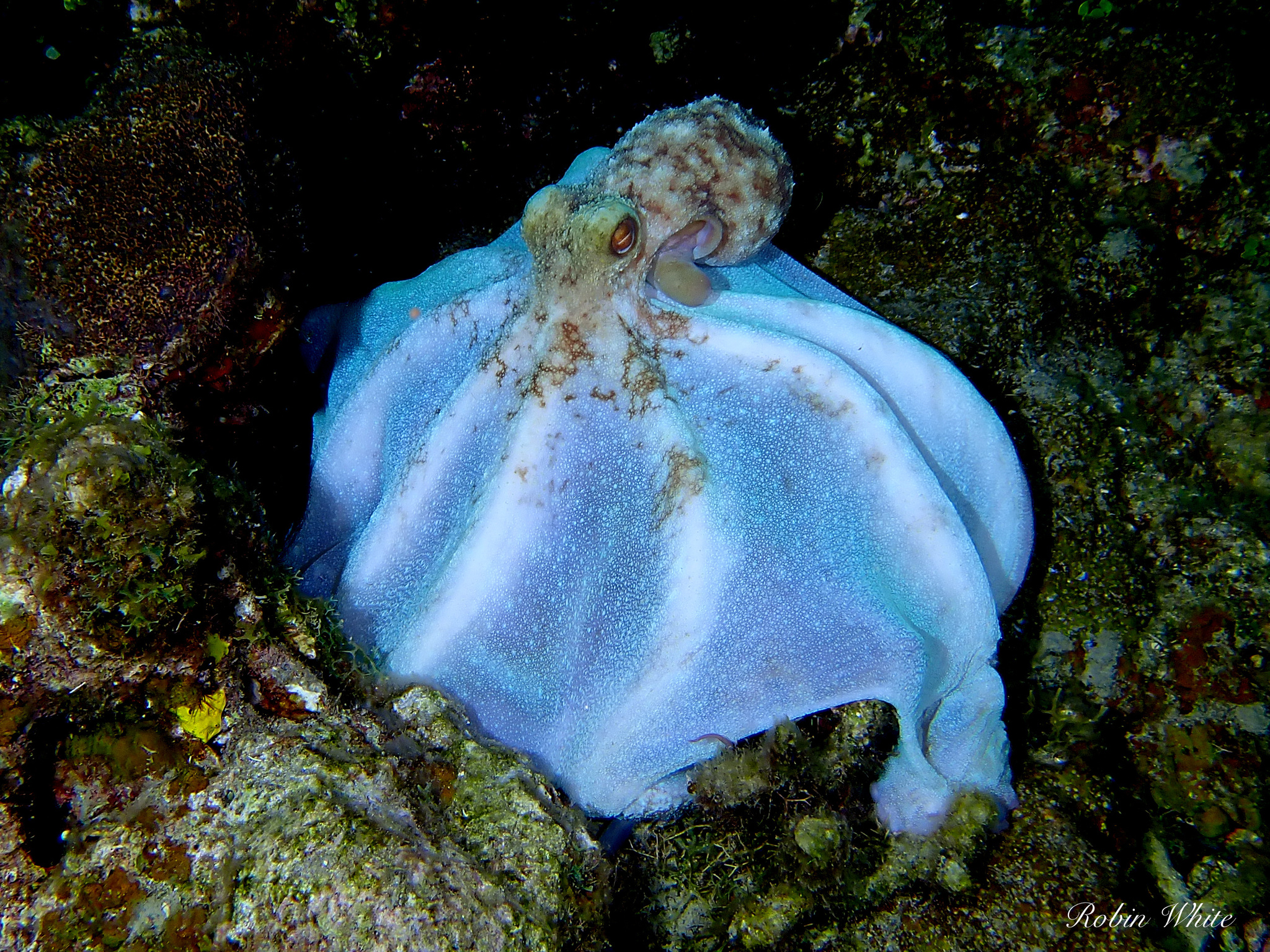
Photo: (c) Robin White, (CC-BY)
Octopus briareus
The Caribbean reef octopus (Octopus briareus) has large prominent eyes, long arms (4 to 6 times mantle length), and characteristically loose webbing that is both deep and thin (almost billowing), which it uses to envelope coral heads, rubble, and prey, as well as an iridescent blue-green color pattern.
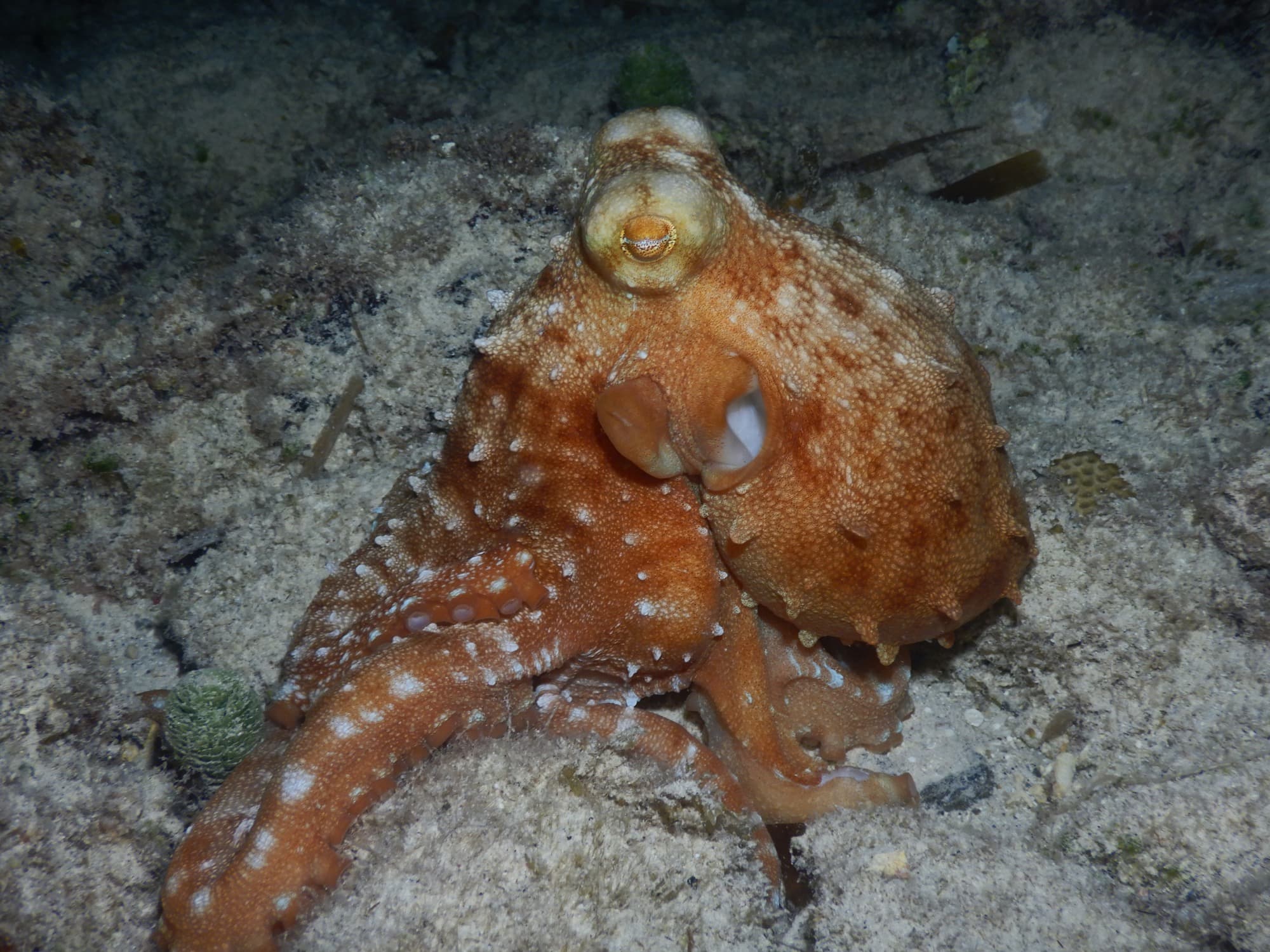
Photo: C.E. O'Brien
Callistoctopus furvus
Muscular species group with elongate mantle, long arms (7 times mantle length) and shallow webbing. Distinctive red/orange color with white spots. This species is nocturnal, and relatively understudied. There are several species of Callistoctopus that are very difficult to differentiate and the genus is not fully resolved. Originally, Atlantic species were lumped into the single name C. macropus, which has since been divided into multiple species based on genetic lineage. C. furvus is the name for the sand octopus species commonly found in the western Atlantic. Due to the visual similarity of these taxa, please use location to verify OctoMatic ID.
Help OctoMatic grow. If you have photos of these taxa and want to help improve our classifier, get in touch.
Photo: Chelsea Bennice
Macrotritopus defilippi
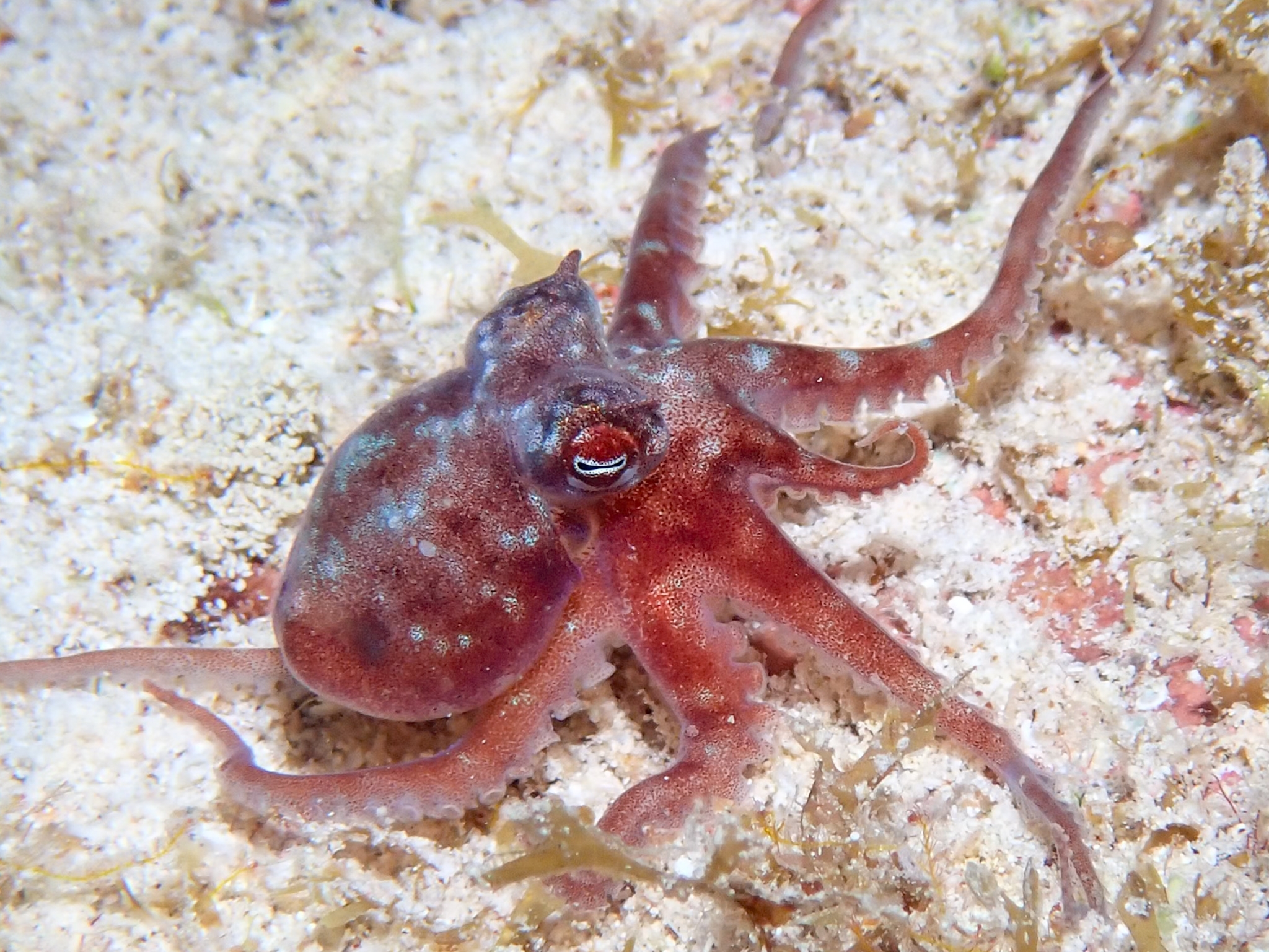
Photo: (c) Dan Schofield - (CC-BY)
Octopus joubini; Paraoctopus mercatoris

Photo: (c) Julien Renoult – (CC BY)
Amphioctopus burryi
Photo: Chelsea Bennice
Octopus americanus
Upload an image for classification! OctoMatic is currently limited to Florida and Caribbean species only.
Try Identify